A ‘one-size-fits-all’ future for gene editing treatments
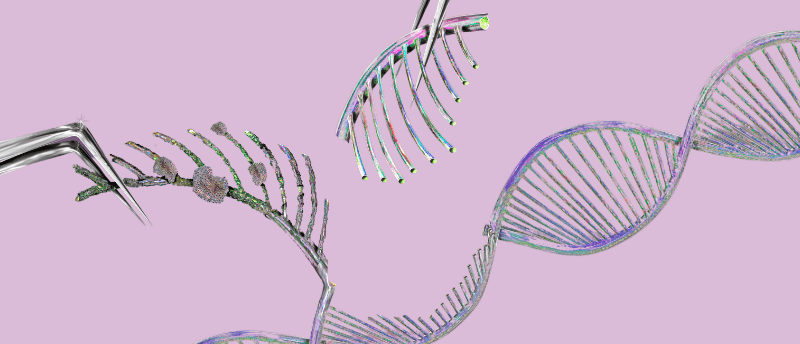
Researchers have developed an efficient gene editing system that could enable replacement of entire genes to treat several genetic diseases.
Researchers at the Liu Lab at the Broad Institute of MIT and Harvard (MA, USA) have recently unveiled the latest version of PASSIGE (prime-editing-assisted site-specific integrase gene editing), called eePASSIGE – an advanced gene editing technology that can insert or substitute entire genes into human cell genomes, offering the potential to treat a range of serious genetic disorders.
Many genetic diseases, like cystic fibrosis, Stargardt disease and phenylketonuria, are associated with not just one, but hundreds of variations within a single gene. Effective treatment of these disorders requires replacement of the entire gene with a healthy working copy, which can be done using a technique called prime editing. Honing this technique represents a key goal for the Liu Lab. In recent years, the research team have developed PASSIGE – a novel system that uses prime editing in concert with large serine recombinase enzymes to insert large chunks of DNA into the human genome.
 Base editors correct gene defect causing hereditary liver disease
Researchers have successfully demonstrated that CRISPR adenine base editors can be utilized to correct a gene defect causing a hereditary liver disease known as argininosuccinate lyase deficiency (ASLD).
While successful, initial versions of PASSIGE were only able to transfer the gene cargo to 6.8% of cultured cells. Upon investigation, the team found that the recombinase enzyme Bxb1 was a key player in limiting the editing technology’s efficiency. To tackle this problem, they rapidly evolved a newer Bxb1 variant, re-engineered for better efficiency. The updated technology, named eePASSIGE, could deliver gene cargo at an average of 30% efficiency – a marked improvement on the previous version.
“The eePASSIGE system provides a promising foundation for studies integrating healthy gene copies at sites of our choosing in cell and animal models of genetic diseases to treat loss-of-function disorders,” affirmed David Liu, senior author of the study. “We hope this system will prove to be an important step towards realizing the benefits of targeted gene integration for patients.”
The team are continuing to develop and improve the technology, hopeful that it will one day progress to the clinic to treat loss-of-function genetic diseases.