Boosting CAR-T therapy success in difficult-to-treat blood cancers
Original story from the University of Maryland School of Medicine (UMSOM; MD, USA).
Researchers have demonstrated how blocking a specific protein keeps CAR-T cells fighting cancer longer, potentially improving outcomes for blood cancer patients.
UMSOM Researchers have identified a target that may improve the response of CAR T-cell therapy, a treatment for patients with recurrent or difficult-to-treat blood cancers.
In a recent study, scientists found increased survival and tumor-fighting activity in lab and animal models when they blocked a specific protein in the modified cells.
CAR T-cell therapy involves genetically engineering a patient’s T-cells, or immune cells, to attack cancer cells and then infusing those cells back into the patient. The therapy can be remarkably effective, but most patients still experience a relapse within 5 years of treatment.
“Genetically engineered cells are a promising new way to treat cancer and autoimmune diseases,” said Tim Luetkens, Associate Professor of Microbiology and Immunology at UMSOM and senior author of this study. “However, scientists are still figuring out how these cells work and how to make them better.”
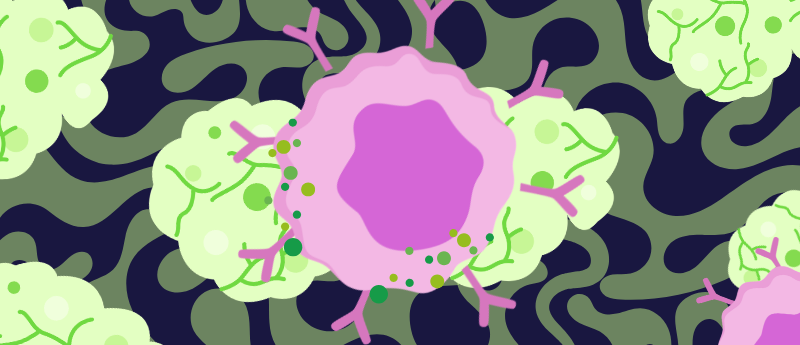
Kenneth Dietze, first author of this study and a research fellow in the Luetkens lab at UMSOM, discovered that some CAR T-cells tear off tiny pieces from the surface of cancer cells and put those pieces onto themselves. “This process makes the CAR T-cells less effective at attacking cancer,” said Luetkens, who is also Director of Research and Development at the University of Maryland Marlene and Stewart Greenebaum Comprehensive Cancer Center (UMGCCC) Fannie Angelos Cellular Therapeutics GMP Lab.
The study team discovered that blocking a protein called cathepsin b prevented the tearing process in CAR T-cells and allowed them to stay active longer, therefore making them better at fighting cancer.
“I am proud of UMGCCC’s continued innovation in CAR T-therapy,” said Taofeek K. Owonikoko, Executive Director of UMGCCC and the Kevin Cullen Distinguished Professor in Oncology at UMSOM. “While these findings need to be translated into human clinical trials, this is real progress that could ultimately improve durability and outcomes for our patients.”
UMGCCC researchers are also leading an ongoing first-in-human clinical trial using CAR T-cell therapy in patients with recurrent or difficult-to-treat B-cell lymphoma.
This research was done together with the Upadhyaya lab at the University of Maryland, College Park, where the team used advanced imaging techniques to directly watch how CAR T-cells tear off fragments from cancer cells.
This article has been republished from the following materials. Material may have been edited for length and house style. For further information, please contact the cited source. Our press release publishing policy can be accessed here.