CAR-iNKT: novel immunotherapy for high-risk childhood leukemia
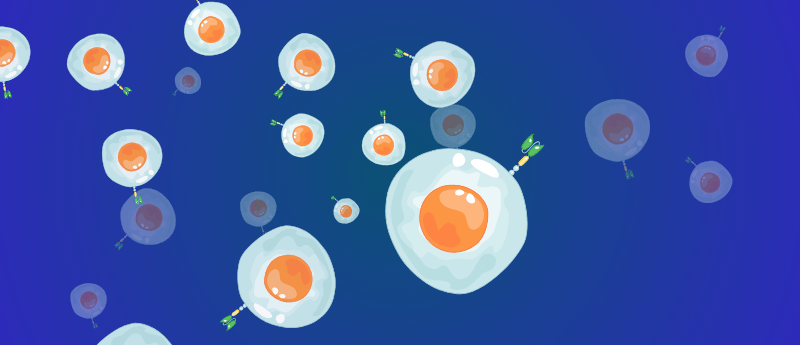
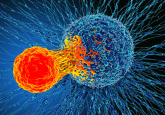
A new immunotherapy that employs invariant natural killer T cells (CAR-iNKTs) shows promise in mouse models of high-risk childhood leukemia, outperforming standard CAR-T treatments.
A collaborative team of scientists from the University of Oxford, Imperial College London and the University of Glasgow (all UK) has developed a promising new immunotherapy for high-risk childhood leukemia using engineered invariant natural killer T cells (CAR-iNKT). Their new approach was more successful than traditional CAR-T therapy in mouse models, completely eradicating cancer cells, even in hard-to-treat areas like bone marrow and spleen.
Acute lymphoblastic leukemia is the most common cancer affecting children. While current treatments successfully cure about 80% of children, the outlook remains concerning for infants and children with certain high-risk variants. KMT2A-rearranged acute lymphoblastic leukemia is a particularly challenging example, characterized by frequent nervous system involvement and poor treatment response.
Although high-risk patients often receive CAR-T therapy, approximately one-third experience relapse. This recurring cancer stems from existing treatments’ inability to completely eliminate cancer cells that have spread to the central nervous system, creating protected reservoirs of disease that can later resurge.
 CRISPR platform enhances natural killer cell therapies
Researchers reveal PreCiSE — a novel genome-wide CRISPR screening platform specifically optimized for NK cells that identifies key genetic targets to enhance their anti-cancer properties.
In response to these challenges, researchers have developed a novel CAR-based therapy utilizing iNKT cells rather than conventional T cells. These CAR-iNKT cells were engineered with dual-targeting capability, recognizing two distinct markers on high-risk leukemia cells — CD19 and CD133 — creating a more precise and effective targeting system.
When tested in mice, the CAR-iNKT therapy completely eradicated leukemia cells, with the animals remaining cancer-free. In contrast, standard CAR-T therapy only removed leukemia temporarily before it returned within weeks.
Perhaps most impressively, the CAR-iNKT therapy successfully eliminated leukemia cells that had invaded the space around the brain, as well as other hard-to-treat areas like bone marrow and spleen. This suggests that the new treatment may be substantially better at preventing relapses than standard CAR-T therapy.
Safety profiles also appear promising, with researchers finding no evidence of major toxicity in their preclinical models, even when administering high doses of the CAR-iNKT cells.
Beyond efficacy and safety, CAR-iNKT therapy offers a crucial logistical advantage, as the cells can be created from healthy donors and stored in advance, making them immediately available when needed, which is crucial for rapidly progressing cancers.
Senior author Anindita Roy (University of Oxford) said, “Along with our collaborators, we have developed and tested CAR-iNKT cells that target leukaemia cells with high efficiency. The fact that these CAR-iNKT cells can be used off-the-shelf means we can treat high-risk patients upfront without any delay. I am very excited about the clinical implications of this novel immunotherapy.”