Guiding axon regrowth to restore motor function in mice after spinal cord injury
Researchers have discovered a promising approach to restoring motor function after spinal cord injuries by guiding axons to their natural target regions, marking a significant advancement in potential therapies.
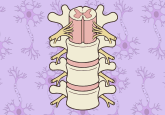
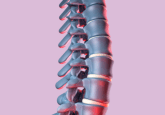
Spinal cord injuries – damage to the network of nerves and nerve fibers responsible for transmitting and receiving signals to and from the brain – can result in either permanent or temporary changes in motor function. Stimulating the regrowth of nerve fibers to restore functional activity following injury has been a key area of research.
In the latest developments, a team of researchers from the Swiss Federal Institute of Technology (Lausanne, Switzerland), the University of California Los Angeles (CA, USA) and Harvard University (MA, USA) have made an important discovery in the quest to restore function after such injuries. The team found that guiding the axons of neurons back to their natural target regions in the lumbar spinal cord led to the recovery of motor function. In contrast, when axon regrowth was untargeted, it did not result in significant improvements in walking ability.
The team previously published a study in 2018 where they identified a treatment approach that could stimulate axonal regeneration across spinal cord injury lesions in mice. However, the issue of restoring motor function remained unresolved. Building on their previous study, the team sought to determine whether a more targeted approach to axonal regeneration could restore motor function in the mice.
Utilizing single nucleus RNA-sequencing, the team identified neuronal subpopulations that were involved in the natural repair of the spinal cord after a partial spinal cord injury. The researchers then tested two different approaches to axonal regeneration in mice models with complete spinal cord injury. The first approach, which involved regenerating the axons of the nerve cells across spinal cord lesions without specific guidance, had no effect on motor function, specifically walking ability. The second approach, which yielded favorable results, involved utilizing chemical signals to attract and guide the axons to their natural target region in the lumbar spinal cord, a region associated with walking ability.
“Our study provides crucial insights into the intricacies of axon regeneration and requirements for functional recovery after spinal cord injuries. It highlights the necessity of not only regenerating axons across lesions but also of actively guiding them to reach their natural target regions to achieve meaningful neurological restoration,” commented Michael Sofroniew, professor of neurobiology at the David Geffen School of Medicine at the University of California Los Angeles and a senior author of the study.
Discussing the clinical translation of these findings, the researchers emphasized that further investigation is required to fully understand how these principles might be applied in humans, where regeneration would be required over a longer distance in a more complex environment. Nonetheless, the findings from the study mark a step closer to developing novel therapies for spinal cord injury.