Patient perspectives on unproven stem cell and regenerative medicine interventions: an interview with Zubin Master

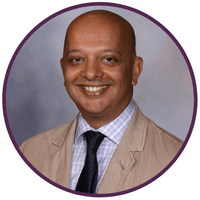 In this interview, corresponding author Zubin Master provides insights into recent findings from Mayo Clinic on patients’ attitudes towards unproven stem cell therapies.
We discuss the information sources patients use to investigate stem cell therapies for musculoskeletal diseases, how healthcare providers can preemptively “inoculate” patients against misinformation and the direction future research should take to support patients in making well-informed choices.
Can you introduce yourself and tell us a little about your role at Mayo Clinic?
My name is Zubin Master and I am an Associate Professor of Biomedical Ethics within the Biomedical Ethics Research Program at the Center for Regenerative Medicine at Mayo Clinic (MN, USA). My research focuses on the ethical and policy issues related to unproven stem cell interventions and regenerative medicine, amongst other areas. I am particularly interested in misinformation; how it spreads and how it impacts patient healthcare . I am also interested in understanding how patients and physicians communicate surrounding unproven stem cell treatments and regenerative medicine. The goal of my research is to not only understand how patients consider unproven therapies but to apply such knowledge to develop evidence-based educational interventions that help patients make better-informed decisions.
Could you briefly explain the focus of this study to the non-specialist and why it is of current interest?
There has been both growth and evolution of the unproven stem cell therapy industry in terms of the number of facilities offering them, particularly in the U.S., and the types of conditions clinics claim to treat. There has not been a study that looks at U.S. patient attitudes towards and reasons for undertaking an unproven stem cell therapy. Our research aims to capture the perspective of those patients. Our goal was to understand the reasons patients were interested in unproven stem cell therapies, what information sources they were using, and whether they had contacted other clinics as part of their research. We did this by adding these questions to the intake form at the Regenerative Medicine Consult Service in Florida, which is a clinical consult service to provide information about stem cell and regenerative interventions for patients.
This study sampled patients seeking stem cell therapies for musculoskeletal conditions. Why might patients in this demographic be more likely to seek out these unproven therapies than patients with other conditions?
The Regenerative Medicine Consult Service in Florida specializes in orthopedic interventions and so most patients have musculoskeletal conditions and are interested in learning more about regenerative medicine for those conditions. For this reason, the consult service in Florida served as a convenient sample to survey patient attitudes. Additionally, the industry very much markets unproven stem cell interventions surrounding musculoskeletal conditions. Leigh Turner’s 2021 paper showed that there are over 2700 clinics in the U.S. providing unproven stem cell treatments, with about 85% of therapies aiming to treat pain and 47% aiming to treat an orthopedic condition. The science surrounding regenerative interventions and orthobiologics is also steadily advancing and being translated for musculoskeletal conditions. This suggests that the lion’s share of the unproven stem cell market is targeted towards musculoskeletal conditions, making a study about patient attitudes and reasons for seeking such interventions pertinent.
What information sources did this study find patients used when considering stem cell therapies?
The internet was by far the most used source of information with approximately 40% of the 533 patients reporting doing some form of online research. Tied into that, we found that approximately 9% of patients found information on social media, or a video or TV segment that was not an advertisement. When we look at interpersonal communication, we found that 20% of patients reported receiving recommendations or advice from people in their social circle, and almost 20% also received information from a healthcare provider or were a former Mayo Clinic patient. We have also heard a lot about stem cell seminars from Paul Knoepfler who first wrote about how clinics use “hard sell” techniques to advertise stem cell treatments. We found that about 5% of patients reported finding out about stem cell treatments through a clinic or one of their sponsored seminars, which we assumed would be higher. Finally, another study by Dr. Leigh Turner showed that many unproven stem cell clinics use the ClinicalTrials.gov registry as a form of advertising their interventions as pay-to-participate trials. Also, we were surprised to find that less than 1% of patients reported searching for information there.
How can patients be supported in seeking unbiased and accurate information?
Our data tells us firstly about some of the misconceptions patients have about stem cell therapies and secondly where they encounter misinformation. With that specific understanding, we can design targeted patient education to correct misinformation. By giving patients access to accurate, evidence-based information, we are allowing them to exercise their autonomy and make better-informed healthcare decisions.
We can also target education to healthcare providers to ensure that they are up to date on the science and encourage them to raise these topics in consultations, even if the patient does not enquire about stem cells. In that way, we can preemptively give patients the correct information and warn them they might encounter false information. This is something that we call “inoculation” in health behavior. Patients are forewarned about falsehoods and armed with the correct information so as to develop an immunity to misinformation before they encounter it.
What is the key point you hope the field can take from this study?
Since the discovery of the unproven stem cell industry, a lot of the focus to curtail it has been on regulation and enforcement. That is important, but it is only one tool in our toolbox. I think more focus should be put on health behavior and health education targeting patient demand for such interventions. There are now very good evidence-based, theoretically-informed strategies to correct misinformation. There are ways to use stories or narratives to convey information more effectively than, for example, patient information booklets. I would like to see researchers focus on the differences that education can make and how to design evidence-based and theoretically-informed persuasive education in the space.
You have investigated this issue from the perspective of clinicians, and now patients. What direction will future research take?
My research focuses on both. I want to understand patients’ values, beliefs, educational resources, and their expectations and anticipated outcomes about unproven stem cell treatments. Understanding these factors will allow us to design better education that can persuade patients to use more rational thinking when considering unproven interventions. My goal is to be able to inform patients better, so they can make a more informed choice.
I also want to design evidence- and theory-based strategies for physicians to change patient behavior. For such interventions to be effective, physicians need to understand patient motivations so that when they counsel patients, they use empathic communication and pre-empt potential misconceptions. Patients are often nervous to raise the topic of unproven stem cell treatments. Physicians, if they have more context and understanding of patient outlooks, can anticipate this and take the onus off the patient to raise the topic.
Read the research in full here >>>
Disclaimer
The opinions expressed in this interview are those of the interviewee and do not necessarily reflect the views of RegMedNet or Future Science Group.
You might also like: