
Prime editing offers hope as a potentially curative approach for sickle cell disease
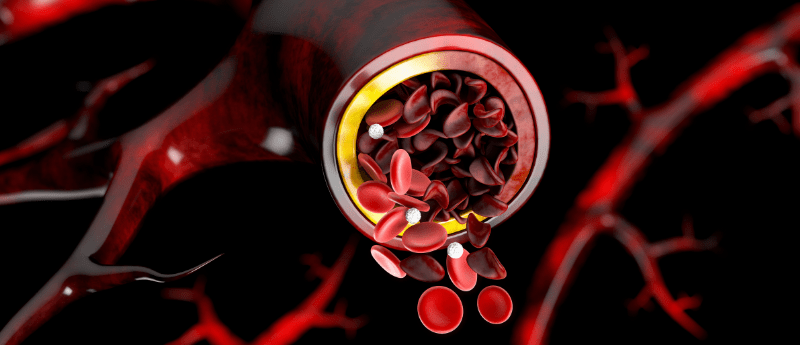
Researchers have shown that the mutation that causes sickle cell disease could be corrected in hematopoietic stem and progenitor cells, providing a potentially curative approach for the disease.
Sickle cell disease (SCD) is an inherited blood disorder that affects millions of individuals worldwide. A mutation in the hemoglobin subunit beta (HBB) gene results in the production of abnormal hemoglobin that forms sickle-shaped red blood cells that are inflexible and can block blood flow to specific organs in the body.
Currently, the only cure for SCD is allogeneic stem cell transplantation, however, the availability of this treatment has been limited by the lack of compatible donors, costs and the risk associated with the procedure, which includes graft-versus-host disease. To reduce the immunogenic risk and the need for compatible donors, scientists have turned to genome editing approaches such as Cas9 and base editors. In the latest developments, scientists have explored whether an ex vivo prime editing approach could rectify the mutation.
Findings published in Nature Biomedical Engineering detail how a collaborative effort between scientists at St. Jude Children’s Research Hospital (TN, USA) and the Broad Institute of MIT and Harvard (MA, USA) demonstrated that prime genome editing could correct the mutation in the HBB gene in hematopoietic stem and progenitor cells (HSPCs). The result is the production of normal red blood cells in sickle cell patients, giving hope that this may be a novel therapeutic approach.
Utilizing HSPCs from a SCD patient, scientists were able to demonstrate that prime editing could identify the mutation in the HBB gene causing the disease, and could replace it with a DNA sequence variant that would result in the production of normal hemoglobin. The team found that 41% of the cells taken from SCD patients had been corrected.
In the preclinical study, modified HSPCs were transplanted into immunodeficient mice, where the team observed restoration of normal blood parameters including a reduction in the abnormal sickle hemoglobin (HbS) levels and an increase in normal hemoglobin (HbA) levels. The scientists reported that an average of 42% of circulating red blood cells obtained 17 weeks after transplantation contained at least one wild-type HBBA allele, a percentage higher than the expected levels for achieving therapeutic benefits. They also observed less sickling of the red blood cells when the edited HSPCs were placed in hypoxic conditions.
Co-corresponding author of the paper, Jonathan Yen commented, “Prime editing is a promising approach because, in theory, we can directly correct disease mutations to specific healthy DNA sequences of our choosing. We optimized prime editing in long-term blood stem cells and showed that the prime editing cells maintain full engraftment efficiency in an animal with a clinically relevant system.”
Whilst the findings have demonstrated the feasibility of prime editing as a therapeutic approach for SCD, the team will now turn their attention to understanding the risks associated with the procedure.