Repairing the irreparable: could damaged mechanosensory hair cells be regenerated?
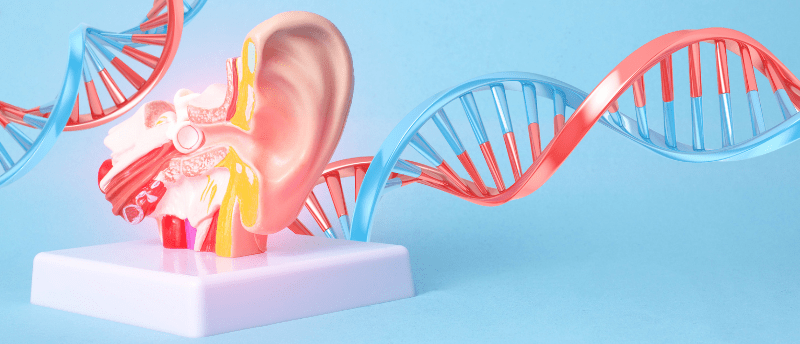
Researchers have unpicked regulatory mechanisms in cochlear cells that could lead to regenerative therapies for mechanosensory hair cells to repair hearing loss.
Two recently published papers from the Keck School of Medicine at the University of Southern California (USC; CA, USA) have shone a light on key regulatory mechanisms in cochlear cells. These findings could be used to develop therapeutic approaches to induce regeneration of sensory cells.
When the mechanosensory hair cells essential to hearing are lost or damaged, they cannot self-renew and are not replaced, making hearing loss irreversible.
In order to overcome this irreversibility, two teams from the lab of Neil Segil, who sadly passed away from pancreatic cancer prior to the publication of these articles, set out to investigate the mechanisms that prevent the regeneration of mechanosensory hair cells. John Duc Nguyen (now at Genentech; CA, USA)led an investigation into the factors that prevent the transdifferentiation of supporting cells into mechanosensory hair cells. It also looked at how epigenetic modifications can be reversed through enzymatic conversion.
Nguyen’s team started with the investigation of epigenetic silencing, chemical modifications that make DNA inaccessible to protein synthesis, examining supporting cells isolated from the cochlea of mice. This examination revealed that genes enabling the conversion of non-sensory support cells into sensory hearing cells, such as Atoh1, were subject to downregulation through epigenetic methylation.
In a separate experiment, they uncovered that chronically deafened mice had partially reversed the epigenetic silencing of their supporting cells. This implies that chronically deafened mice are capable of partially reversing epigenetic silencing and are thus naturally primed for future regenerative therapies that could enable the transformation of supporting cells into hair cells.
A second group, led by Emily Xizi Wang (now at Atara Biotherapeutics; CA, USA), investigated the regulatory elements that control how and when progenitor cells change into sensory hair cells during early development.
They demonstrated that Sox4 and Sox11 induce sensitivity in auditory progenitor cells to the master regulator gene, Atoh1, in a window of embryonic development that spans 12–13.5 days. Increasing the expression of the two Sox genes induced the in vitro conversion of both progenitor cells and supporting cells into hair cells. What’s more, knock out of the two genes led to a closed conformation of the regions of DNA that respond to Atoh1 signaling, blocking the differentiation of progenitor cells into mechanosensory hair cells.
Building on their discovery of the importance of these genes, Wang’s team tested the impact of increased expression and activity of Sox4 and Sox11 proteins in mice with damaged hearing. They found that increased activity led to a 36% increase in the portion of vestibular supporting cells that converted into mechanosensory hair cells. Wang’s study increases the understanding of the developmental control of the mammalian inner ear and identifies genes with potential in regenerative therapeutics.
Corresponding author Ksenia Gnedeva (USC) of the second paper commented: “We’re excited to continue exploring the mechanisms by which cells in the inner ear gain the ability to differentiate as sensory cells during development and how these can be used to promote the recovery of sensory hearing cells in the mature inner ear.”
These research papers contribute to a growing bank of knowledge surrounding the control mechanisms of hearing, laying the groundwork for therapeutics to overcome chronic hearing damage through regeneration rather than traditional treatments.