
The interface of scientific innovation and clinical application: an interview with Henry Henderson III

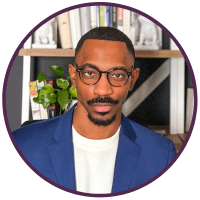
In this interview, Henry Henderson III, Oncology Medical Science Liaison, Foundation Medicine (MA, USA) reflects on the pivotal moments that shaped his career, addresses the importance of cancer awareness and how he utilizes his oncology background in medical affairs − “the interface of scientific innovation and clinical application.”
Henry J. Henderson III is a trained cancer biologist and cancer health disparities advocate. He received his BSc from Southern University and A&M College (LA, USA) and his PhD in Integrative Biosciences from Tuskegee University (AL, USA). Following his graduate studies, he completed his postdoctoral fellowship at Vanderbilt University Medical Center (TN, USA) where he also served as a US Food and Drug Administration American Association for Cancer Research (FDA-AACR; PA, USA) Oncology Educational Fellow.
Currently, Henderson is an Oncology Medical Science Liaison. From lobbying on Capitol Hill (DC, USA) for cancer research funding to serving as an expert panelist and keynote speaker for several prominent patient advocacy organizations, Henderson has contributed ardently to his field. Most notably, he is the co-founder of Black in Cancer, an organization aimed to increase Black representation in cancer-related fields.
What initially drew you to the field of life sciences?
As a child, I was naturally drawn to science, with a particular fascination for biology. I dreamed of becoming a veterinarian or wildlife biologist, inspired by my love for animals and curiosity about the natural world. My mother played a pivotal role in nurturing this passion, encouraging my explorations and fueling my enthusiasm for discovery. I spent hours reading an animal encyclopedia I received as a gift and even set up a makeshift lab in my bedroom to conduct my own experiments. Over time, this early fascination with animals evolved into a broader interest in biology, ultimately shaping the scientific path I would pursue.
How did your background in oncology shape your approach to medical affairs?
My background in oncology has profoundly shaped my approach to medical affairs by reinforcing the importance of clear and effective scientific communication. While I have always been passionate about teaching, I knew early on that I did not want to pursue a traditional academic professorship. Instead, I recognized the critical need to bridge the gap between complex oncology research — particularly in therapeutics, genomics and their impact on patient outcomes — and diverse audiences, including healthcare providers, industry stakeholders and patients. Medical affairs, which serves as the strategic interface between scientific innovation and clinical application, provided the ideal avenue for me to apply my expertise. My training in both basic and translational cancer biology equipped me with the depth of knowledge necessary to interpret and contextualize emerging data, while my focus on effective communication allowed me to translate this information into meaningful insights for a wide range of audiences. This combination has enabled me to thrive in medical affairs, ensuring that scientific advancements are not only understood but also effectively integrated into clinical decision-making.
Can you give us some insights into the type of therapeutics you have worked with/on in your oncology research?
During my postdoctoral research, I focused on non-small cell lung cancer, specifically studying tyrosine kinase inhibitors, a class of targeted therapies designed to block signaling pathways that drive cancer growth. While tyrosine kinase inhibitors have significantly improved outcomes for patients with epidermal growth factor receptor-mutated non-small cell lung cancer, acquired resistance remains a major challenge, ultimately limiting their long-term effectiveness. My research was centered on investigating strategies to overcome this resistance, exploring how cancer cells adapt and identifying potential therapeutic approaches to restore treatment efficacy. This line of research was particularly exciting for me, as it not only deepened our understanding of tumor evolution but also had direct implications for improving patient outcomes. Even now, as an Oncology Medical Science Liaison, I remain highly interested in the mechanisms of resistance and how advances in biomarker testing can help guide treatment decisions and address these challenges in clinical practice.
Do you see gaps in how cancer awareness is addressed, particularly in underrepresented communities?
Cancer awareness is essential in improving patient outcomes, yet significant gaps remain, particularly in underrepresented communities. While disparities in cancer incidence, stage at diagnosis, and outcomes are well-documented in the United States, many communities lack a clear understanding of why early detection is especially critical for groups that are diagnosed at younger ages and more advanced stages. The importance of routine screenings and timely interventions is often underemphasized, leading to missed opportunities for better prognosis. I see gaps in how these messages are communicated, particularly in ensuring that they are accessible, culturally relevant and tailored to specific populations. However, with increased and consistent outreach — through education, advocacy, and community engagement — we can begin to bridge these gaps and drive meaningful improvements in cancer awareness, early detection, and ultimately, patient outcomes.
In celebration of Black History Month, are there any Black figures that have played a pivotal role in influencing and shaping your scientific career?
Growing up, I rarely saw Black scientists represented on TV, which made it difficult to envision myself in the field. Instead, I turned to books to discover figures who looked like me and had paved the way in science and academia. While I admired many Black scientists, it was philosopher and scholar W.E.B. Du Bois who had the greatest influence on my journey. His unwavering belief that education was the key to unlocking opportunities deeply resonated with me and ultimately pushed me to pursue a PhD. His advocacy for intellectual excellence and the power of knowledge reinforced my determination to contribute meaningfully to science, particularly in oncology, where disparities persist. His legacy continues to inspire me, reminding me that representation and access to education are critical in shaping the next generation of Black scientists.
What advice would you give to others considering a similar career path?
My advice would be to not let fear hold you back from taking the first step. The journey may feel uncertain at times, but growth comes from pushing past discomfort. Be teachable. Science and medical affairs are ever-evolving fields and the ability to adapt and continuously learn is essential for success. Seek out mentors who can provide guidance, encouragement and perspective, especially when the path is not straightforward. Mentors can help you navigate challenges, open doors to new opportunities and remind you that setbacks are a natural part of progress. Most importantly, believe in your ability to contribute meaningfully and stay committed to your goals even when the road ahead feels unclear.
The opinions expressed in this interview are those of the author and do not necessarily reflect the views of RegMedNet or Taylor & Francis Group.