
Zebrafish kidney regeneration: a blueprint for human repair
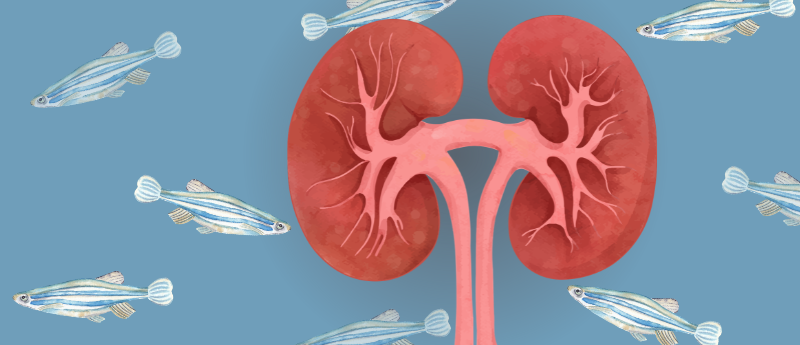
Researchers uncover the foundation of zebrafish kidney regeneration.
Chronic kidney disease is a leading global health issue, caused by the irreversible loss of nephrons. Unlike humans, zebrafish can regenerate nephrons after injury, seamlessly integrating them into the kidney’s existing tubule network. Scientists at the MDI Bio Lab (ME, USA) have uncovered the cellular and molecular mechanisms behind this process, which could guide future efforts to regenerate functional human kidney tissue and address broader challenges in regenerative medicine.
The human kidney relies on a complex network of tubules to filter waste and maintain fluid balance. While advances in regenerative medicine have enabled the growth of kidney tissue in the lab, integrating this tissue into a living system remains a significant challenge. For lab-grown nephrons to function, they must connect to the existing tubule network.
“It’s a plumbing problem,” says Iain Drummond, Scientific Director of MDI Bio Lab’s Kathryn W. Davis Center for Regenerative Biology and Aging.
“It’s one thing to grow kidney tissue in a Petri dish,” he continues. “It’s another to integrate that tissue into a working organ — to link new plumbing into old pipes and send fluid through without leaks, or blockages, or wrong turns.”
Zebrafish can naturally accomplish this, so understanding the mechanisms that achieve this integration could provide a roadmap for human kidney repair.
The team studied how zebrafish regenerate nephrons and connect them to the kidney’s tubule network using advanced imaging. They observed a precise cellular choreography at the junction where new nephrons meet older tubules. At this connection site, certain cells extend protrusions into neighboring tissue, initiating the link between old and new structures. Nearby cells divide to support tubule growth, while others differentiate into specialized filtration units. This coordination ensures seamless integration of the new nephron into the kidney’s plumbing system.
Using molecular biology techniques, the researchers also identified molecular signals guiding this process. The canonical Wnt pathway, a well-known signaling system, plays a central role, while a receptor called fzd9b helps orient the connection, ensuring proper alignment and functionality.
The new nephrons successfully connect to the tubule network, allowing fluid to flow through the kidney without leaks or blockages. This functional integration is critical for restoring filtration and maintaining kidney health.
These findings have significant implications for regenerative medicine. While growing kidney tissue in the lab is becoming feasible, ensuring that it integrates and functions within the body remains a major hurdle. By uncovering the cellular and molecular processes behind this integration in zebrafish, the study provides a foundation that could be applied to human tissue repair in the future.