Breathing life into lung cell therapies

The novel engraftment of engineered stem cells forms the basis of promising cell therapies, which one day could restore lung tissue subject to injuries or genetic disorder.
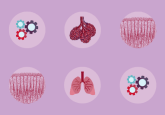
Two recent papers led by Darrell Kotton, director of the Centre for Regenerative Medicine (CReM; MA, USA) describe the latest developments in a 20 year exploration of lung tissue regeneration. They devised methods for successfully engineering and engrafting stem cells into injured lung tissue to restore functional and durable populations that can self-renew. This has the potential to provide a cell therapy for lung disease, either in the form of an injury e.g., pulmonary fibrosis, or an inherited disorder, that has reduced immunogenicity.
Lung tissue possesses specific regions called stem cell niches, which are microenvironments that give the biophysical, biochemical and physiological cues to maintain and enable stem cell differentiation. This formed the focus of two recent research papers that examined the reconstitution of different lung stem cell niches.
Automated lung disease diagnosis
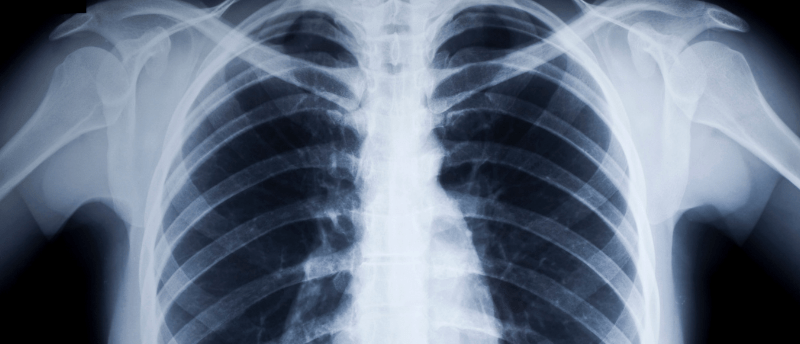
Artificial intelligence (AI) used to diagnose lung diseases may reduce winter hospital waiting times.
The first paper focused on the airways of the lungs, which are naturally self-renewed by epithelial basal cells. The researchers engineered both mouse and human stem cells into basal cells and then engrafted them onto injured lung airways via intra-airway transplantation. The populations of engrafted stem cells were able to proliferate into basal cells and differentiate into epithelial cell types.
The second paper focused on the reconstitution of lung tissue where gas exchange occurs, known as the alveoli. The team, working on mice models, engineered murine pluripotent stem cells into lung epithelial progenitor cells. These precursors of alveolar cells were engrafted onto injured lung tissue and after months in vivo, analyzed using a combination of single-cell RNA sequencing, histologic profiling and functional assessment. Kotton’s team observed the continued capacity of engrafted cells to proliferate into self-sustaining progenitor populations that differentiated into lung tissue cells like alveolar cells.
Michael Herriges, the first author of the alveolar paper commented, “Since these cells will be the patient’s own cells, differing only in the corrected gene, in theory they should not be rejected after transplantation back into that patient, thus avoiding any need for immunosuppression, as we have demonstrated in our two proof-of-concept syngeneic transplantation studies in immunocompetent experimental models”.
Both studies therefore demonstrated the ability of engrafted stem cells to form self-renewing populations that could differentiate into functional cell types.
The researchers envision the use of engineered cells to replace injury-affected tissue and correct faulty cell populations of people with genetic disorders, like cystic fibrosis or primary ciliary dyskinesia.
“While treatment of lung diseases like emphysema, pulmonary fibrosis and COVID-19 will take a lot more research, we are hopeful that those with gene mutations that cause damage to lung airways or alveoli, such as children or adults with familial forms of lung disease, might be treatable in the future with this type of approach.” added Kotton.