Bridging the gap between cancer research and impacted communities: an interview with Chrystelle L Vilfranc
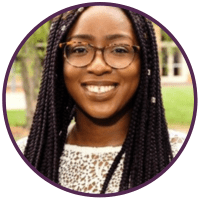 In this interview, Chrystelle L Vilfranc, Associate Director of Research Integration, Colombia University (NY, USA), shares insights into her role, which centers on community outreach and engagement in cancer disparities research, including liver cancer. She is committed to creating opportunities that directly impact her community and is passionate about representation in STEM and mental health advocacy.
Chrystelle L Vilfranc is a native of Brooklyn, New York (USA), born to Caribbean immigrant parents. She received her Bachelor of Science in Biochemistry, with a minor in Mathematics, from a Historically Black College and University (HBCU), Oakwood University (AL, USA). She completed her PhD in Cancer and Cell Biology, where her dissertation work involved using basic science, molecular and cell biology approaches to determine the role of a key protein in protecting the liver against injury. She then completed a postdoctoral research fellowship in cancer-related population science in the Department of Epidemiology at Columbia Mailman School of Public Health (NY, USA). Her work focused on environmental exposure studies as well as breast cancer disparities research, particularly postpartum breast cancer. She currently serves as Associate Director of Research Integration for the Office of Community Outreach and Engagement at Columbia’s Herbert Irving Comprehensive Cancer Center (NY, USA).
Please introduce yourself and tell us a little bit about your work in cancer and cell biology.
My name is Chrystelle L Vilfranc. I am a cancer and cell biologist by training who has recently pivoted to public health, specifically cancer disparities research. I received my PhD in cancer and cell biology, studying how a large, unique protein protects the liver against injury, chronic liver disease and liver cancer. I then completed a postdoctoral research fellowship in cancer-related population sciences where I engaged in molecular epidemiology research as well as population science work. I then transitioned into my current role at my cancer center, where I serve as the Associate Director of Research Integration for the Office of Community Outreach and Engagement. In this role, I lead various efforts to bridge the gaps between our cancer center’s research and researchers to the communities we serve to impact.
Can you give us some insights about your PhD project on how the liver protects itself against injury, liver disease and liver cancer? What’s something people should know about the liver?
My dissertation project focused on understanding the role of a large protein, called BRUCE, in the development of liver cancer, specifically hepatocellular carcinoma. Our lab discovered that BRUCE is essential for repairing damaged DNA. When we analyzed liver tissue from patients with chronic liver disease, we found that about half had lower levels of BRUCE, which was linked to more severe disease. In experiments with mice, I found that losing BRUCE in the liver made DNA repair less effective and worsened liver cancer. My research also uncovered that BRUCE helps regulate another key protein, beta-catenin, which is involved in protecting the liver from scarring (fibrosis) and cancer after liver injury. Altogether, the studies suggested that BRUCE levels could serve as a marker to predict liver cancer risk and may lead to new targeted treatments for patients with low BRUCE levels.
The liver is a great organ in that it is one of the most regenerative organs in the body. The liver is our body’s filter system; therefore, it faces several threats while doing its job of breaking down toxins and drugs, metabolizing various substances, etc. If the liver receives any form of injury, there are various mechanisms in place for it to defend and protect itself. The liver is self-protective, in that it can resist damage and repair itself if damaged, all while maintaining its functions. Different liver cells have specific functions that aid the liver in being a self-protected organ. Hepatocytes, the most common cells in the liver, rapidly divide to replace damaged liver tissue. Other cells act as an immune defense to help the liver protect itself from bacteria, toxins and other potential threats.
What sparked your interest in science, particularly in cancer and cell biology?
My father was my first introduction to science who nurtured my interest and passion for science at a young age. At age nine, I lost my closest cousin to non-Hodgkin’s lymphoma, which sparked my interest in understanding cancer specifically. A mentor of mine in college gave me a research opportunity that led me to doing research. With my interest in cancer, I moved forward with identifying cancer-related graduate school opportunities. After learning the biology of cancer, I wanted to pivot and move more towards opportunities to directly impact my community, which led me to cancer disparities research.
Can you share some information about your current projects?
Most of my current work is related to community outreach and engagement. However, I have a few research projects that I am working on with some of my collaborators. One of the projects I am working on involves looking at food insecurity as a risk factor for liver cancer. Food insecurity is defined by not always having enough safe and healthy food to eat, usually due to lack of funds or other issues within a household. In a recent study looking at county-level liver cancer cases from 2018–2021, we found that higher levels of food insecurity was associated with an increased risk of the most common form of liver cancer, hepatocellular carcinoma. We also found that younger individuals, specifically those under the age of 65, faced a 15% higher risk of liver cancer, compared to a 2% increased risk in those 65 and older. We are hoping to start a new project looking at food insecurity specifically among our cancer center’s liver cancer patients to identify any potential associations between food insecurity and liver cancer incidence.
You were the creator of a writing series for women of color in STEM – what was the series about and what inspired you to start it?
I worked with an online platform for Women of Color and Non-binary people of color in STEM, called VanguardSTEM (PA, USA). In collaboration with VanguardSTEM, I created two series.
The first series was the #WomenCrushWednesdayInSTEM or #WCWinSTEM, where every week we highlighted a woman of color and later non-binary people of color in various fields in STEM. It was a great series to show our online community the various faces of people of color in STEM. Personally, it was my source of motivation and a way to identify a few mentors of my own from these features. More importantly, the message was ‘you can’t be what you don’t see.’ Visibility and representation of various people in STEM is key for expanding access to STEM pathways.
The second series was Reveal to Heal which was a mental health series of personal narratives as well as various curations of mental health resources that I felt were helpful for people of color in STEM fields. I shared personal pieces of my own mental health journey, as well as key resources I’ve used personally or heard of for mental health support.
I truly enjoyed both series and while I no longer contribute to them I am hopeful that the pieces I did contribute were useful and helped others. I am still very passionate about representation in STEM and being a mental health advocate.
Looking back on your career journey, what advice would you give your younger self, especially as a woman of color in STEM?
The advice I would give my younger self would be to:
Be open and flexible
I’d advise my younger self to be more open and flexible because initially, I was completely focused on going to medical school. I was a bit rigid and was not really open to pursuing any path that did not involve medical school. As you can see, today I am not a medical doctor and I have absolutely no regrets with regards to not pursuing medical school.
Keep asking all the questions
I was a very inquisitive child and asked a lot of questions. At times, I was hushed and dismissed and sometimes this discouraged me from asking more questions. I believe this natural inquisitive nature of mine is what made becoming a researcher the ideal career for me. I can only imagine how much better a researcher I would have been if my natural inquisitiveness was nurtured and encouraged, or if I simply ignored the discouragement and asked away.
When things get tough, remember why you started
This was my mantra all throughout graduate school. Graduate school was one of the most difficult periods of my life, but I had to remind myself why I wanted to learn more about cancer. I would remind myself of my cousin and the answers we lacked years ago. Throughout the years, there were many times, even before graduate school, that I wanted to give up, but remembering why I started out on this journey is what anchored me.
The opinions expressed in this interview are those of the interviewee and do not necessarily reflect the views of RegMedNet or Taylor & Francis Group.