Novel gene therapy platfrom shows promise in Duchenne muscular dystrophy preclinical model
Original story from The University of Texas MD Anderson Cancer Center (TX, USA).
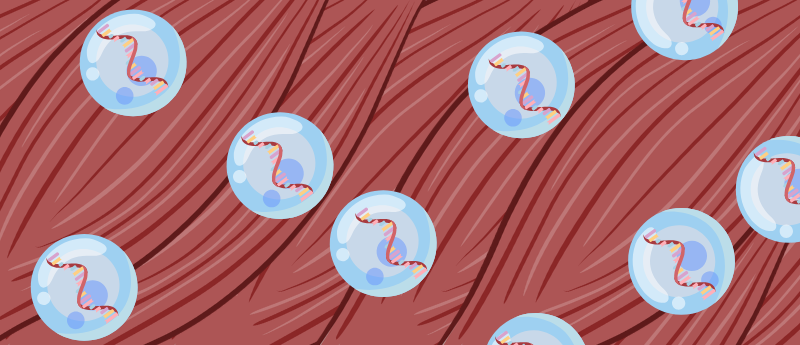
A novel platform utilizing extracellular vesicles (EVs) to deliver messenger RNA (mRNA) encoding the DMD gene safely restored dystrophin production and improved muscle function in preclinical models of Duchenne muscular dystrophy.
A new treatment platform developed by researchers at The University of Texas MD Anderson Cancer Center was able to deliver mRNA of the full-length DMD gene into preclinical models of Duchenne muscular dystrophy, successfully restoring the production of an important muscle protein, dystrophin, and dramatically improving muscle strength, endurance and function in vivo.
The study was co-led by Betty Kim, professor of Neurosurgery and core member of the James P. Allison Institute™ (TX, USA), and Wen Jiang, associate professor of CNS Radiation Oncology.
The approach uses engineered EVs — natural nanoscale delivery particles — which offer distinct benefits over current viral-based gene therapies, including reduced side effects and the ability to transfer the entire DMD gene. The researchers engineered the EVs with special tags that directly target skeletal muscles after being injected into the bloodstream.
“Our new platform overcomes the limitations of current viral-based gene therapies, allowing for the delivery of full-length mRNA, restoring wild-type translation of dystrophin and significantly improving muscle function,” Kim said. “We are highly encouraged by these results, which provide a blueprint for mRNA-loaded EVs as a next-generation therapeutic strategy.”
What is Duchenne muscular dystrophy and what are the limitations of current gene therapies?
Duchenne muscular dystrophy is a severe genetic disorder that causes muscle weakness and degeneration. It is caused by mutations in the DMD gene that prevent the body from producing dystrophin, which helps stabilize and protect muscle cells during contractions in healthy individuals. Without dystrophin, the muscles become easily damaged, leading to eventual inflammation and cell death.
Duchenne muscular dystrophy primarily affects males, with symptoms such as delayed walking and waddling usually appearing in early childhood. As the disease progresses, it leads to loss of walking ability, scoliosis, heart problems and eventual respiratory failure.
Because DMD is the longest known gene in the human genome, current viral-based gene therapies are unable to carry the full length, meaning they must use shortened versions that address different symptoms. These limitations result in the loss of the gene’s full function and come with serious side effects, dose-limiting toxicities, immune reactions and even possible death.
These side effects have resulted in the removal of at least one US Food and Drug Administration (MD, USA)-approved gene therapy from the market and are partly why researchers have been trying to develop alternative ways of safely delivering the full-length DMD gene.
How is this new therapy different?
mRNA technology, which was recognized by the 2023 Nobel Prize in Physiology or Medicine, holds great potential in pathogenic infections as well as diseases like cancer. In fact, the researchers had previously used mRNA-loaded EVs to enhance responses to immunotherapy in glioblastoma, suggesting the technology’s potential use for cancer therapy. Ongoing preclinical work continues to improve production methods and examine the safety of EV-based mRNA therapy.
In this study, the researchers used their method to load the full-length DMD mRNA into EVs that were engineered to specifically target and bind to skeletal muscles. Injection of these mRNA-loaded EVs led to an increase in dystrophin protein expression as well as improved muscle strength and function in preclinical models, with no serious side effects.
Importantly, the treatment stayed on target inside of skeletal muscles and did not trigger any immune responses or toxicities commonly seen with viral-based treatments, even after repeated dosage.
What are the broader implications for EV-mediated mRNA therapeutics?
Future studies are needed to determine the full safety of EV-mediated mRNA platforms for clinical trials, including whether they can be delivered to cardiac muscles, as heart conditions are commonly seen in advanced disease. However, based on these results, the authors point out this could be a promising method beyond treating Duchenne muscular dystrophy, also potentially serving as a broader “protein restoration” or cellular reprogramming platform.
“Given that we are now able to replace very large proteins, this platform- and disease-agnostic approach could potentially open doors far beyond rare genetic disorders and traditional gene therapy applications,” Kim said. “It’s possible this could ultimately enable restoration of proteins lost not only through inherited diseases but also from acquired or degenerative processes, including cancer, autoimmune disorders, neurodegeneration, fibrosis and other chronic diseases.”
This article has been republished from the following materials. Material may have been edited for length and house style. For further information, please contact the cited source. Our press release publishing policy can be accessed here.