3DMedNet meets Bioanalysis Zone: 3D printing in the bioanalytical laboratory
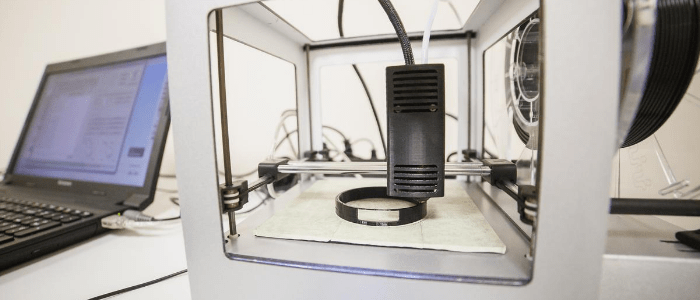
In this interview with Laura Mercolini (Alma Mater Studiorum – University of Bologna, Italy), we discuss how 3D printing is benefiting bioanalytical research: from sampling to sample handling, pretreatment and even instrumental analysis.
Biography

I am Laura Mercolini, Associate Professor in Medicinal Chemistry at the University of Bologna (Italy) and Head of the research group of Pharmaco-Toxicological Analysis (PTA Lab) at the Department of Pharmacy and Biotechnology (FaBiT). My research activity is currently focused on the development of innovative strategies for the analysis of psychotropic compounds in biological and non-biological samples and with the implementation of advanced technologies for sampling, sample handling and pretreatment. My research is embodied in more than 70 peer-reviewed papers and more than 200 communications to national and international congresses, meetings and workshops. The expertise of my research group is in the tailoring and implementation of cutting-edge analytical platforms with high degree of miniaturization and automation.
Could you explain your role and give an overview of how you utilize 3D printing technologies in your laboratory?
In my research group we develop bioanalytical solutions to be applied, amongst others, to clinical settings, in the forensic field and for anti-doping analysis, thus we study new approaches with high applicability that can be widely exploited. On the one hand, multidisciplinary collaborations with stakeholders of various nature are crucial in our activities, allowing us to identify the main scientific problems to focus on. The technological component plays a fundamental role as complex problems require non-classical solutions. Therefore, the methodologies developed at the PTA Lab are designed ad hoc to address and solve such issues through the implementation of cutting-edge technologies and innovative approaches. In this context, 3D printing is of considerable interest, as its high versatility and virtually infinite range of possibilities make it a promising and fully applicable resource.
How did you first become involved with 3D printing? What attracted you to the technology?
I had the demonstration of the great potential of 3D printing thanks to the numerous research collaborations that the PTA Lab has undertaken and consolidated over the last years. In fact, the multidisciplinary dialogue with scientific and technological realities coming from both academia and the industrial world allowed me to know and appreciate advanced and promising technologies, potentially applicable to the concept of integrated bioanalytical platforms.
How is 3D printing aiding the development of new analytical methods based on microsampling coupled with mass spectrometry?
3D printing represents a versatile, flexible and virtually unlimited approach to combine and hyphenate in a virtuous and advantageous manner for every single phase of the bioanalytical workflow: from sampling to sample handling, pretreatment and instrumental analysis. By tailoring special, ad hoc interfaces, it is possible to create connections and supports that were unthinkable up to now, expanding the possibilities and areas of application in a terrific way.
When introducing new technologies and innovative applications into the biomedical laboratory, what key things need to be considered?
Those who, like our research group, make method development their main expertise must always bear in mind that many biomedical methodologies must feature high applicability among the main requirements. This means that researchers and analysts in every corner of the world should be able to put these analytical strategies into practice and successfully implement them. Therefore, in addition to guaranteeing the goodness and reliability of the analytical result, such approaches must be adoptable by others with ease, thus they must be streamlined, simply implementable but robust, with procedures and protocols that can be carried out without complicated operator training.
In designing analytical methods for therapeutic drug monitoring and drugs of abuse monitoring, what are the main challenges? How could 3D printing help to overcome these challenges?
Analytical platforms for clinical and forensic monitoring have the key requirement to be able to be exploited at high throughput, with an effective cost and time reduction, given the high number of samples that must be processed in a short time. The possibility of automating processes and being able to combine in a single platform the different steps of the bioanalytical process (sample handling, pretreatment and analysis) in a seamless and online way could give tremendous added value to all routine practices. In fact, an effective protocol that can be operated quickly and at low cost is a protocol that can be applied more frequently. We know that, for example in therapeutic drug monitoring, frequent analyses result in better therapy personalization, increased subject compliance, reduced side effects and ultimately in an overall improvement in the patient’s quality of life. In this scenario, 3D printing, when properly designed, potentially represents every connection point between the process nodes, capable of limiting operator intervention, speeding up processes and improving reproducibility. One of the potentials of 3D printing is to make even basic protocols extremely innovative and more performing, creating cutting-edge combinations through the implementation of modules tailored ad-hoc and at low cost.
Are there any limitations with 3D printing technologies you would like to see developed further in order to enhance progression of your research?
From my point of view, the only limitation with 3D printing lies in the ingenuity of scientists. Basically, if you are able to imagine an interface, a valve, a support, a device etc., it is achievable through 3D printing. Therefore, the driving force of these new technologies is represented by the ability to design, adapt and focus on the big picture. With ever increasing accessibility, more and more scientists will be able to transform their ideas into tangible objects and this represents a technological revolution that should not be underestimated, as it paves the way to endless solutions for the main bioanalytical problems.
In which areas do you envision 3D printing technologies benefitting the most, within biomedical R&D?
In the bioanalytical framework, I believe there are many intervention points where 3D printing can make the difference throughout the entire workflow. Some examples include the design of sampling devices that can be easily housed within automated systems. The production of sample treatment and purification devices obtained through functionalized polymers, allowing process miniaturization and modeled according to innovative and high-performance designs. The design of lab-on-valves and lab-on-chip technologies: these could be able to enclose the capabilities of a chromatographic system in a few square centimeters thanks to the implementation of advanced microfluidic systems or lead to self-regenerating pretreatment systems working seamlessly. I also expect the development of new interfaces potentially combining samples with any kind of detector and allowing screening analysis in a few seconds. The only limit is imagination. The field for exploring the full potential of 3D printing is extremely broad and will hopefully allow more ingenious and bold scientists to emerge with revolutionary ideas.
 |
Find out more about bioanalysis and bioanalytical workflows on our sister site, Bioanalysis Zone. |