Novel platform could enhance CAR-T therapy
Researchers have developed a novel platform in the hopes of enhancing CAR-T cell therapies.
In a recent study, a team of researchers at the University of California, Los Angeles (UCLA; CA, USA) has developed a novel platform that could enhance the effectiveness of CAR-T cell therapy in fighting cancer. The study suggests that this platform may not only improve patient outcomes but also be used to develop emerging treatments in tissue engineering and regenerative medicine.
CAR-T cell therapy has transformed the field of regenerative medicine, providing an alternative treatment option for blood cancers. Autologous CAR-T cell therapy involves modifying a patient’s immune cells and reintroducing them into the body to directly target cancer cells. However, current CAR-T manufacturing methods struggle to mimic immunological synapse formation between antigen-presenting cells and T cells. It is believed that this synapse allows the T cell to effectively recognize and attack cancerous cells. Without accurately forming this synapse, CAR-T cells may be less effective.
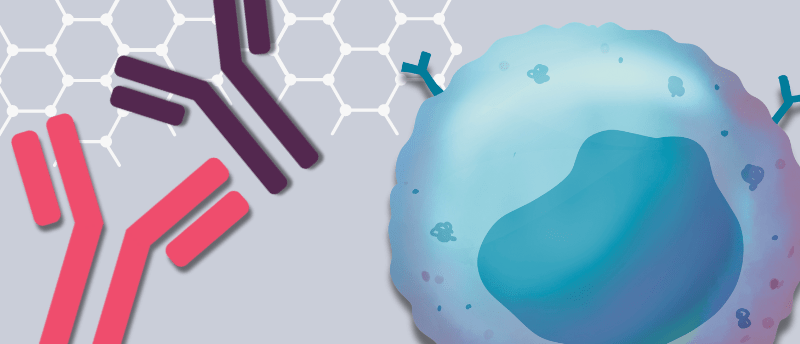
Up for a challenge, the researchers aimed to enhance how immune cells interact, thereby improving the response of reinfused CAR-T cells, which is essential for the therapy’s success. To do this, they developed the graphene oxide antigen-presenting platform (GO-APP), which attaches anti-CD3 and anti-CD28 antibodies to a flexible material, graphene oxide.

Targeting CD7 to treat T-cell acute lymphoblastic leukemia
A novel CAR-T cell therapy targeting CD7 has proven effective in treating relapsed or refractory T-cell acute lymphoblastic leukemia (T-ALL).
In vitro interactions between antibodies on the GO-APP and T cells closely imitate the way T cells and antigen-presenting cells communicate in the body. Over a period of 12 days, their GO-APP helped increase T-cell expansion by over 100 times in a culture of blood cells. The platform further boosted the efficiency of engineering immune cells, resulting in a five-fold increase in CAR-T cell production over the standard method.
“We’ve developed an exciting new approach to boosting the effectiveness of T cell therapies,” said co-corresponding author Lili Yang. “Our method enhanced the potency and efficiency of these cells in ways that weren’t possible with traditional methods. This is particularly important for CAR-T cell therapy, where the strength and proliferation of T cells makes a significant difference in patient outcomes.”
The researchers demonstrated that their GO-APP not only enhances the development of CAR-T cells but also activates key biochemical pathways involved in T-cell signaling and function, promoting greater growth and efficiency. Additionally, the platform stimulated the production of autocrine interleukin-2, potentially eliminating the need to manually add this immune factor during the manufacturing process.
“This work depended on cross-disciplinary collaboration, merging the fields of immunology, materials science and engineering, nanotechnology and bioengineering. With teamwork like this, as well as innovation, perseverance, and a deep commitment to finding better ways to fight cancer, we’re building a future where genetically engineered superpowers aren’t just in comic books — they’re in our hospitals, saving lives,” said co-first author Jiaji (Victor) Yu.