Black History Month 2025: celebrating contributions, innovation and impact
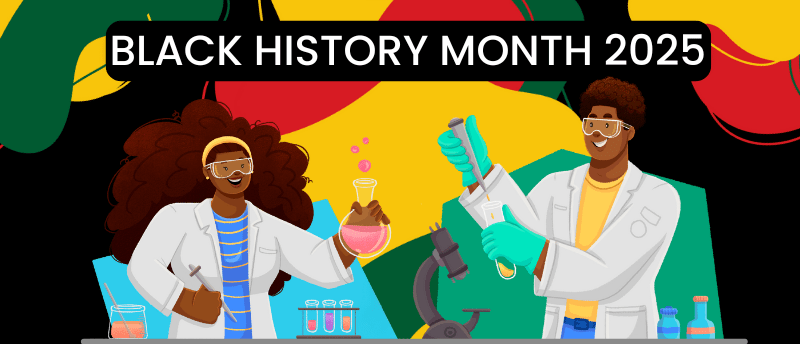
For Black History Month (BHM), we’re celebrating the contributions of Black scientists and professionals whose work continues to shape the field of regenerative medicine. From research and clinical innovation to patient care and advocacy, their efforts drive progression and aim to improve lives.
This month, we’ve highlighted the experience of Black individuals in STEM, including achievements and research – not only in science and medicine but also in the lives of those who benefit from a more inclusive and diverse scientific community.
Peek behind the paper: A sustainable approach to derive sheep corneal scaffolds from stored slaughterhouse waste
In this Peek behind the paper feature from our journal, Regenerative Medicine, Peter R Corridon from the Department of Biomedical Engineering and Biotechnology at Khalifa University (Abu Dhabi, United Arab Emirates) discusses his work on offering a sustainable solution to the global donor shortage. The research article, titled, “A sustainable approach to derive sheep corneal scaffolds from stored slaughterhouse waste,” highlights the potential to repurpose slaughterhouse waste to generate corneal scaffolds.
“This method maintains the optical and mechanical properties necessary for potential clinical use, providing an ethical and cost-effective alternative for corneal grafts,” said Corridon.
Building a bone from scratch: an interview with Ronke Olabisi
In this interview, Ronke Olabisi, Associate Professor at the University of California, Irvine (CA, USA), discusses her journey into tissue engineering and how she uses biosynthetic materials to construct a diversity of tissue types.
The interface of scientific innovation and clinical application: an interview with Henry Henderson III
In this interview Henry Henderson III, Oncology Medical Science Liaison, Foundation Medicine (MA, USA), reflects on the pivotal moments that shaped his career, addresses the importance of cancer awareness and how he utilizes his oncology background in medical affairs − “the interface of scientific innovation and clinical application.”
“While disparities in cancer incidence, stage at diagnosis, and outcomes are well-documented in the United States, many communities lack a clear understanding of why early detection is especially critical for groups that are diagnosed at younger ages and more advanced stages,” highlighted Henderson.

Developing citrate-based biomaterials: an interview with Guillermo Ameer
Guillermo Ameer (Northwestern University; IL, USA) shares insights into the development and applications of citrate-based biomaterials and the considerations for clinical translation.
Bridging the gap between cancer research and impacted communities: an interview with Chrystelle L. Vilfranc
In this interview, Chrystelle L Vilfranc, Associate Director of Research Integration, Colombia University (NY, USA), shares insights into her role, which centers on community outreach and engagement in cancer disparities research, including liver cancer. She is committed to creating opportunities that directly impact her community and is passionate about representation in STEM and mental health advocacy.
“I lead various efforts to bridge the gaps between our cancer center’s research and researchers within the communities we serve to impact…We are hoping to start a new project looking at food insecurity specifically among our cancer center’s liver cancer patients to identify any potential associations between food insecurity and liver cancer risk,” commented Vilfranc.

Expanding the horizons of cell and gene therapy: an interview with Nisha Durand
Nisha Durand, GMP Director at Carolina BioOncology Institute – BioCytics (NC, USA), gives insights into her work on mesenchymal stem cell therapy for intracerebral hemorrhage.